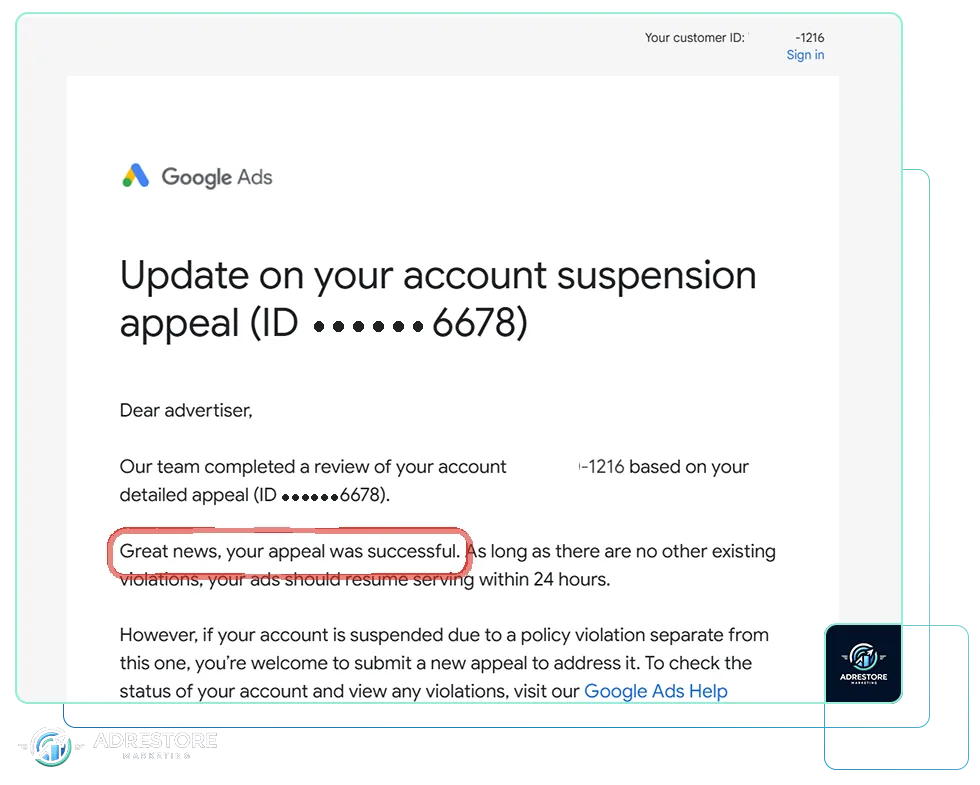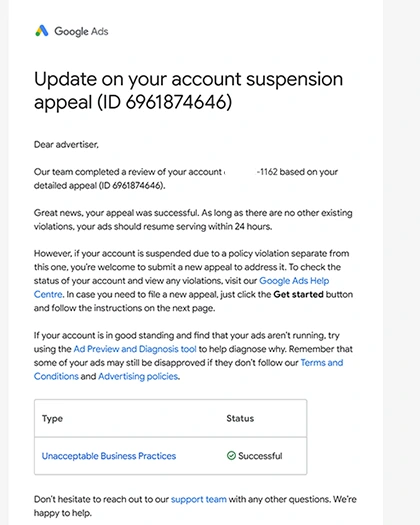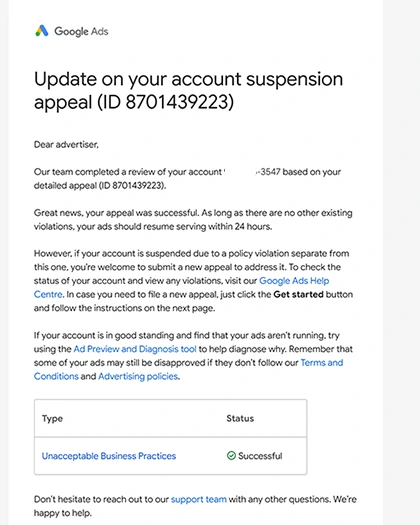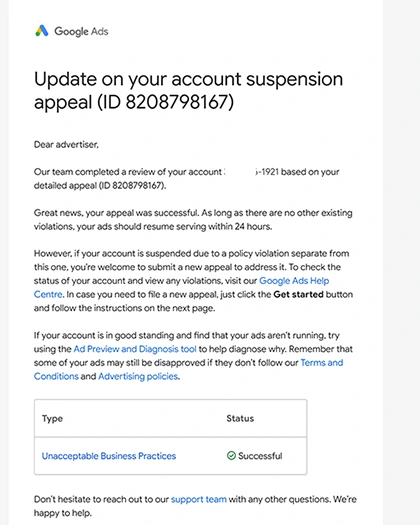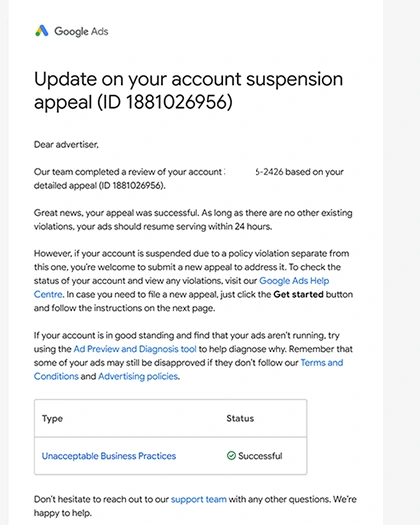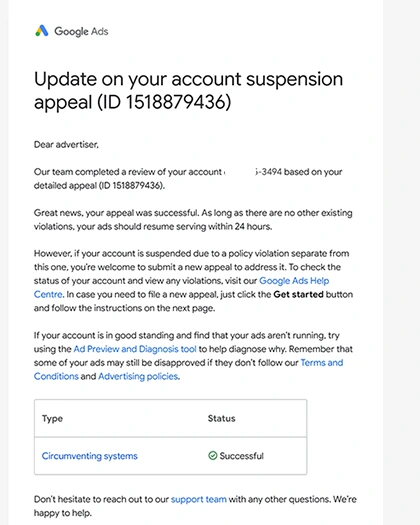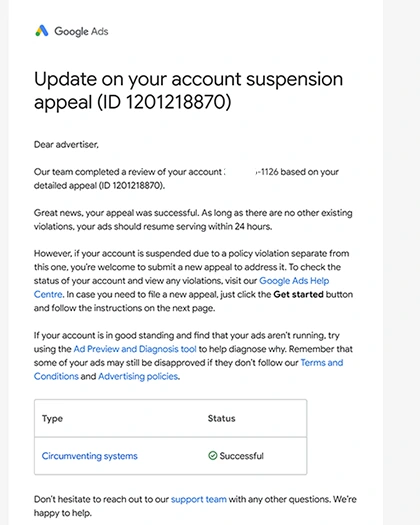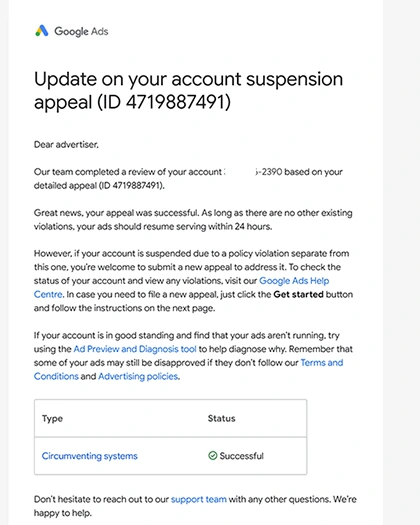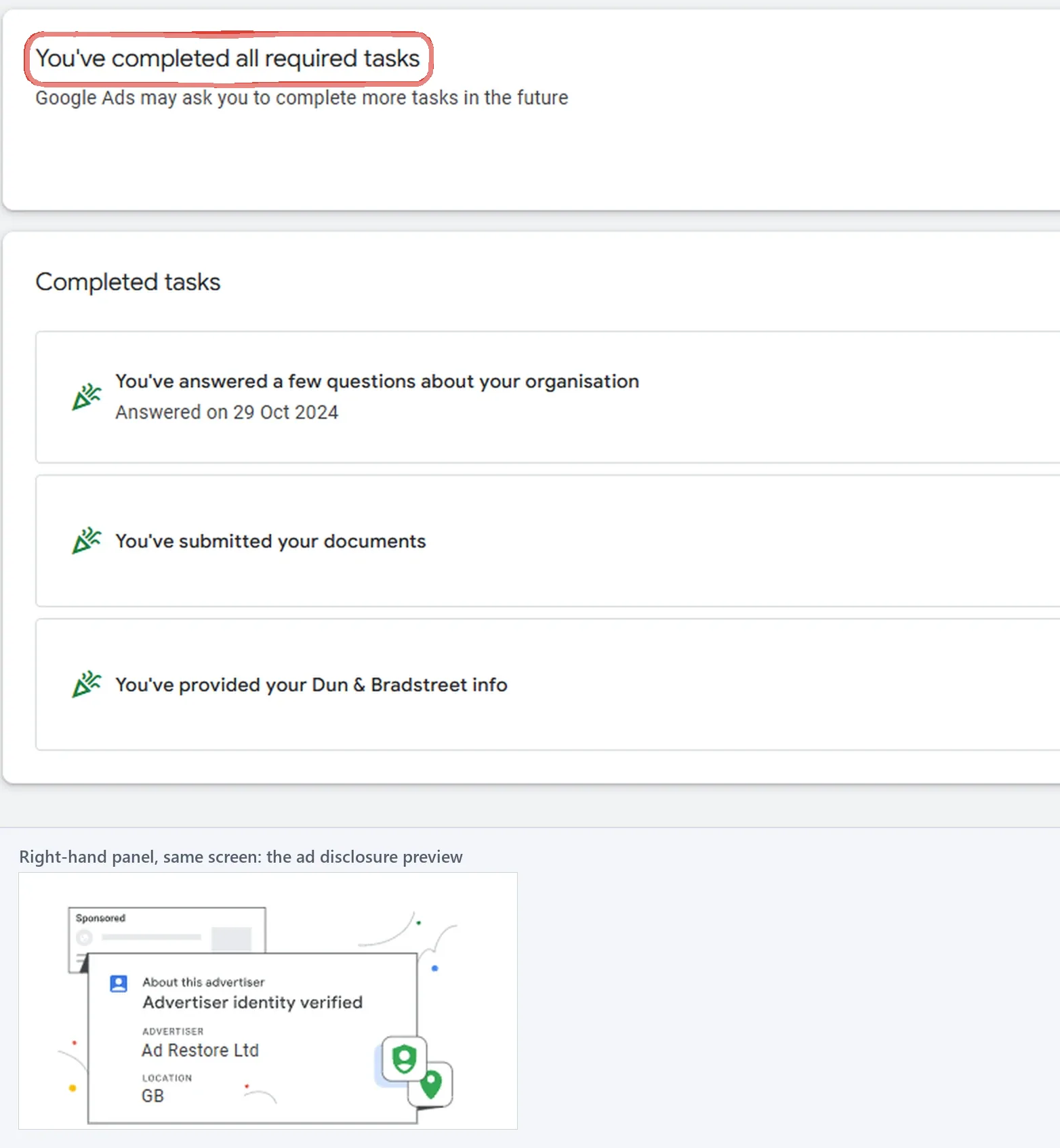
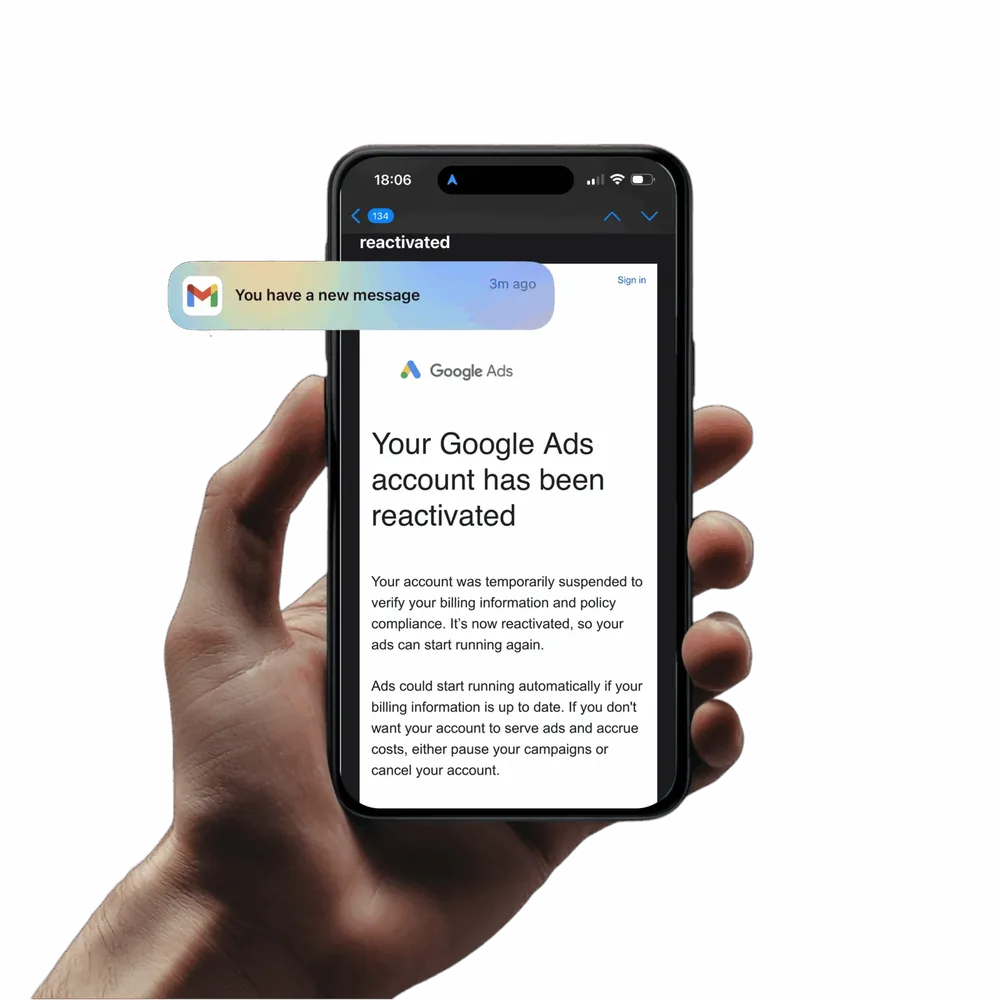
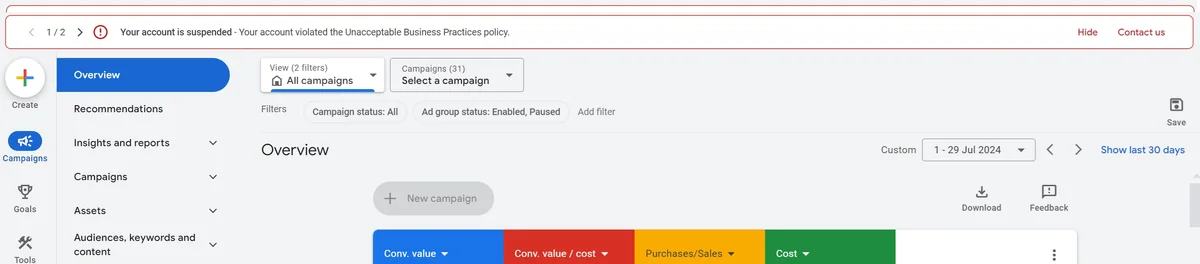
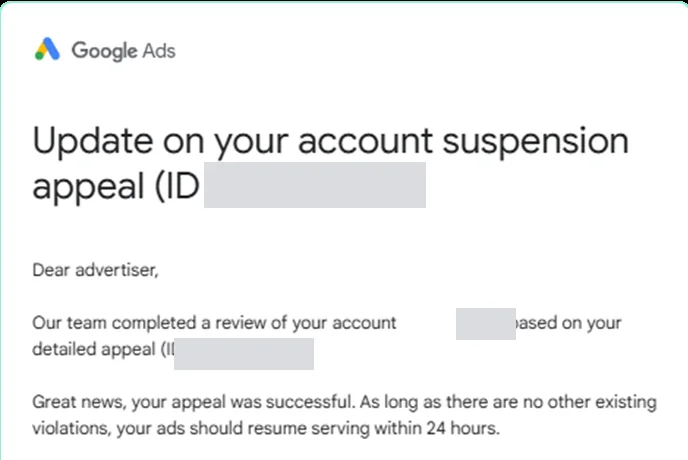
Your Google Ads appeal was most likely rejected because it was filled in rather than built, and at Ad Restore Ltd, a UK firm that handles Google Ads suspensions and appeals, it is the first thing we look for. Most self-filed appeals treat the form as an administrative step: a short assertion of innocence, no changes to the account, no evidence, and no engagement with the specific policy at issue. An appeal saying you have done nothing wrong gives a reviewer no fact to check. Three things compound it. The rejection names the policy but not the section of it, so most people appeal against the wrong thing. Nothing on the account changes between attempts, so the resubmission is the same case that was already refused. And repeated failures narrow your options: in our experience a repeat submission risks automated rejection rather than consideration, and for a disapproved ad Google limits each ad to three appeals, after which you cannot file again without contacting support.
What an appeal actually is
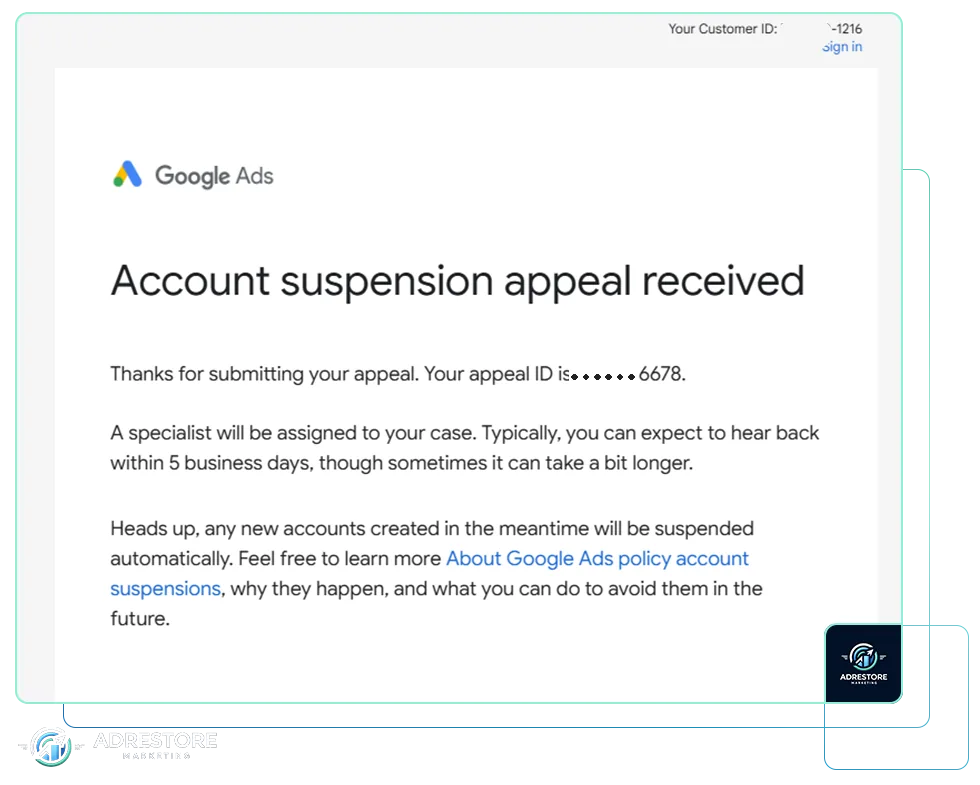
An appeal is a request for a second review of an enforcement decision. Google’s guidance on fixing a disapproved ad or appealing a policy decision sets out the two grounds the form asks you to choose between: Dispute decision
, or Made changes to comply with policy
. If nothing on the account has changed since the decision, the second ground is not open to you.
As our director Gianluca Catinella puts it: you cannot stand in front of a judge, say I am innocent
, and be believed off the bat. You need evidence, a plan, and an understanding of which part of the policy you have fallen foul of.
What the rejection tells you, and what it hides
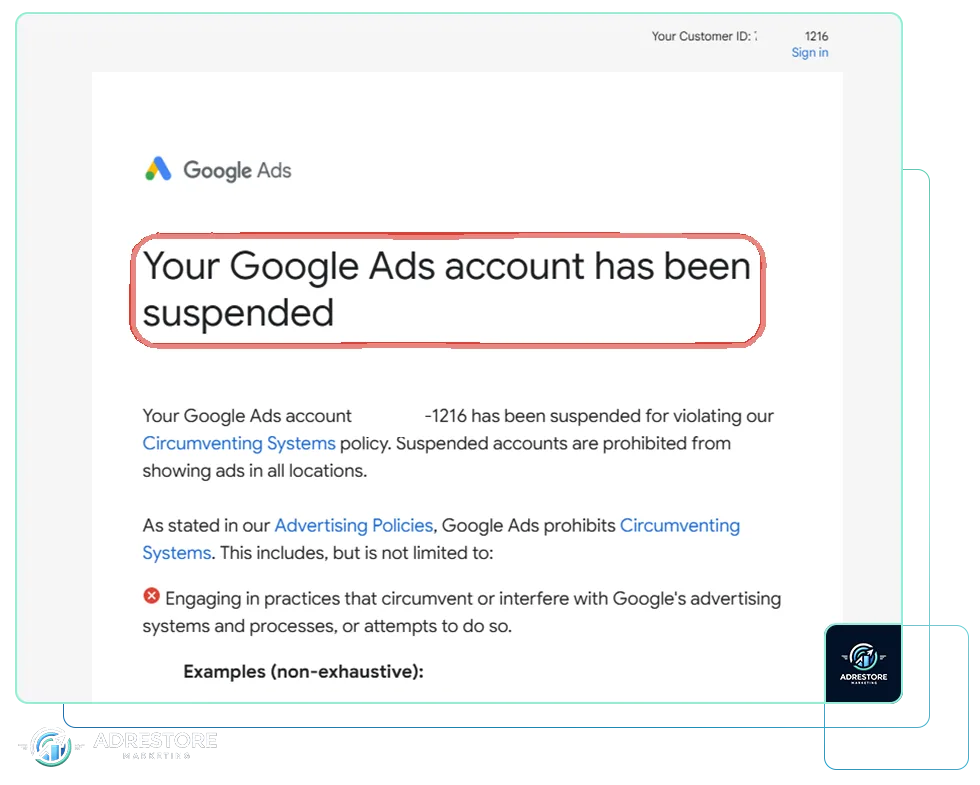
The notice tells you which policy you violated, which is useful. What it does not tell you is which section of that policy. Headings such as circumventing systems or unacceptable business practices each contain many sub-clauses covering very different conduct, so appealing against the heading rather than the clause produces a generic submission, which is easy to dismiss. In our experience Google resolves ambiguity against the advertiser: faced with a case it cannot quickly verify, it will remove rather than investigate. The burden of proof sits with you.
What makes an appeal worse
| What rejected appeals contain | Why it fails | What belongs there instead |
|---|---|---|
| A statement that you have done nothing wrong | Asserts innocence with no fact a reviewer can check | What was found, where, and what has been removed |
| An answer aimed at the wrong policy reason | In our experience an appeal that does not identify exactly the right reason is dismissed rather than examined | The specific clause, in Google’s own language |
| Documents belonging to a relative or previous owner | Documents must pertain to the account owner and align with the account settings | Identification and company records in the owner’s name, legibly scanned |
Two separate rules govern the paperwork. A scan that cannot be read is ignored. And a document that does not align with your account settings is not accepted, which includes a company address that does not match your landing page.
Why a second rejection is harder to recover from
Repeat failures compound. In our experience, the more appeals that have already failed, the more likely it is that an automated system rejects the next one outright rather than taking it into consideration. In our own casework a case tends to resolve on the first or second appeal; it is rarely, if ever, the third, so the submission you make next is the one that has to carry the argument.
Where the decision you are appealing is a disapproved ad rather than an account suspension, there is also a published cap. Google’s guidance on fixing a disapproved ad or appealing a policy decision states: Each ad is limited to 3 appeals. If you appeal an ad unsuccessfully 3 times, you won’t be able to file an appeal for that ad again until you reach out to customer support.
The same page advises waiting at least 24 hours between appeals so they are not marked duplicates.
Our own casework fits that. A decision returning within about ten minutes is almost certainly automated; one inside 24 hours may well have been seen by a person; and most appeals we handle reach a human within roughly five days. That is our experience, not documented Google process, but the lesson holds: you want a human reading it, and a thin repeated submission invites quick disposal.
What to do before you appeal again
- Stop filing, and settle any outstanding Google balance. Another identical attempt puts the same refused case back in front of the same system. Any balance outstanding on the account should be settled before the appeal is filed, not argued about; treat it as an operational step that clears the ground rather than part of the case you are making.
- Identify the exact breach. Read the named policy in full and find the clause your account genuinely meets. If you cannot point to it, you are not ready to file.
- Sweep the account, not just the ad. The landing page, the content, the business style, the keywords, the disapproved ads sitting on the account, the policy detail, and what was changed shortly before the suspension.
- Fix the landing page and the business information. The company address for the business needs to match the address on your landing page, and both need to align with your account settings.
- Check what Google can cross-reference: your public company register, Companies House in the UK and outside it the equivalent records you must supply yourself; the domain registration and whether it sits behind privacy protection; and the payment method and where else it has been used, so the appeal accounts for them rather than leaving Google to find them. These must correlate before the appeal is written.
- Collect documentation. Identification, proof of registration to your address, company records from when the account was set up, evidence of domain ownership, and, where you advertise another company’s services, the contract authorising it, which materially strengthens a case.
- Then file once, stating the breach, the remediation and the evidence, in that order, without argument.
What not to do
- Do not argue, and do not phone repeatedly. Disputing the decision without evidence is the fastest route to a closed case, and getting heated with a support team that does not handle your case type achieves nothing.
- Do not open a new account or switch payment method to get around it. Google’s documentation on what happens if you violate our policies is explicit:
Any related accounts (for example, accounts using the same payment method) will also be suspended, and any new accounts you create will be automatically suspended.
A suspension is resolved, not routed around. - Do not leave it. A suspension stays attached to you whether the system surfaces it now or later, so address it early.
When an appeal cannot be rescued
Some cases genuinely cannot be won, and we would rather tell you that than take the case. These situations tend to be unrecoverable.
- No access to the domain being advertised. The one true impossibility: if you no longer own it and cannot prove you did, there is no explaining why it is still in the account.
- Advertising a business that is not yours, with no contractual agreement from the provider establishing your relationship to it.
- Financial services keywords run without the verification Google requires before that sector may advertise, a process covering the services you provide, the licences you hold and your registration numbers.
- No access to your own technical back end. If nobody can reach the website, hosting or tracking, nothing can be corrected or evidenced.
- A tracking URL Google has classified as phishing.
- Gambling, pornography and sexual content: sectors we do not serve.
Separately, some accounts we decline on effort rather than odds. Two domains on one account is already difficult; above three, the investigation and cost required are more than the case can carry.
Multiple suspensions, circumventing systems, unacceptable business practices and volumes of disapproved ads are harder, not impossible: several past accounts, for instance, can be addressed by declaring every account you have ever held to Google and asking for them to be reviewed together, rather than leaving them undisclosed. Otherwise there is no suspension type we refuse on sight.
How we approach it differently
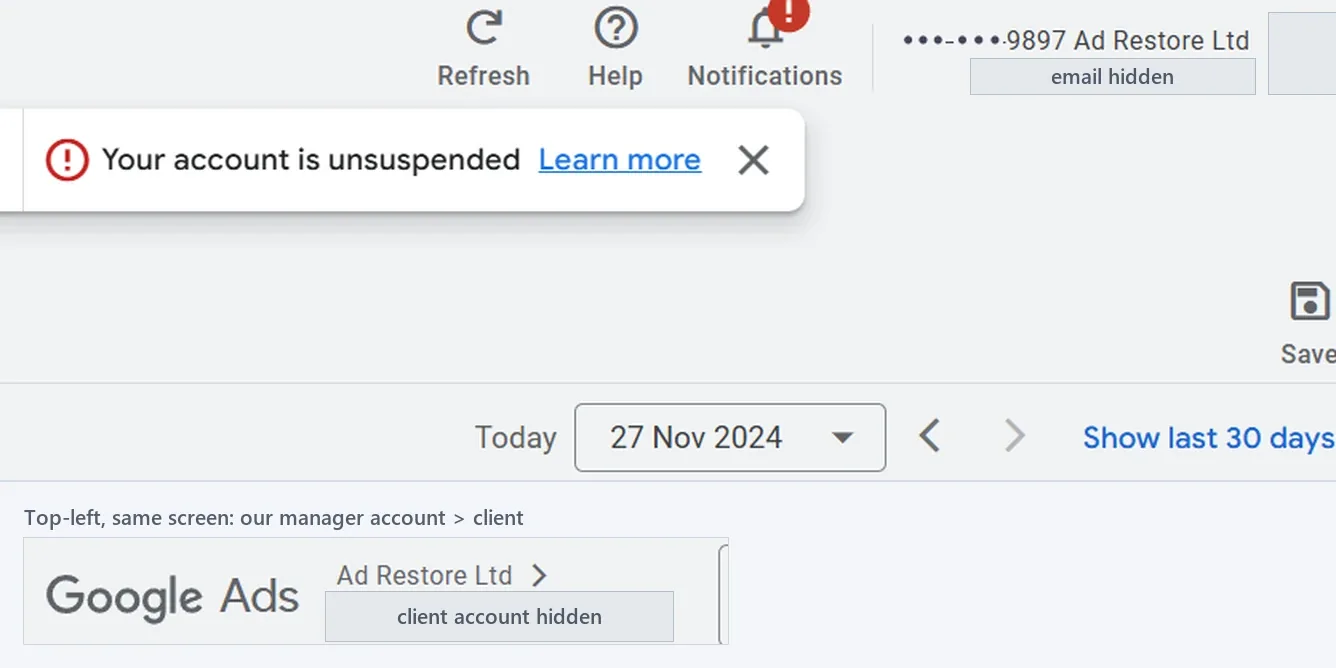
Our appeals are longer, more specific and written in Google’s own policy language, addressing the identified issue fully and without filler. While the client gathers documents we assess the whole account and the landing page; changes made shortly before the suspension are part of what we examine, alongside the disapproved ads on the account, the policy detail and where trust was broken. The difference is in the case, not the channel: we file the form inside the client’s own Google Ads account, and where an account is linked to our agency manager account that changes only where a submission comes from, not what it is worth. It carries no weight with Google and no bearing on how an appeal is assessed. We are independent of Google, we have no privileged channel into it, and nobody can guarantee reinstatement.
Our terms are set out on their own pages: no fix, no fee, help without account access where you have lost it, and 14 days of post-reinstatement support once the invoice is settled. No fix, no fee is a fee arrangement, not an outcome guarantee. Reinstatement is Google’s decision and nobody can promise it.
Talk it through before you file again
If your appeal has already been rejected, the next one matters more than the last did. Book a consultation and we will tell you honestly what we think the account’s chances are, including when the answer is that it is not probable.