Why Is My Google Ads Account Suspended? Disapprovals, Limits, Pauses and Suspensions Explained

A large mint-to-lilac question mark above four status dots, on a dark navy ground
Disapprovals, limited ads, policy warnings, account pausing and account suspension are five different enforcement states with five different routes back. This guide, sourced throughout to Google's own Advertising Policies documentation, shows advertisers how to tell which one their notification describes before they respond to it.

Something in your Google Ads account has stopped, and the wording in the notification is not telling you how bad it is. That is the first thing to establish, and it is where most advertisers go wrong. An ad that will not serve, an account banner about a policy, and an account that has genuinely been shut down all arrive looking roughly the same, and in the cases that reach me, businesses spend days preparing the wrong response to the wrong problem.

So before you write a single word to Google, work out which state you are actually in. There are at least five, and four of them are not suspensions at all.

“Suspended” is not one thing

Google Ads enforcement is layered. It can act on one ad, on a group of ads, on your ability to serve in certain places, or on the whole account. In practice, an advertiser who says “my account is suspended” is usually in one of these five states:

  • An ad is disapproved. One ad, keyword or asset breached a policy and will not serve. The rest of the account continues to serve.
  • An ad is limited or restricted. The ad runs, but not everywhere or not to everyone.
  • A policy warning has been issued. The account is still serving, and the notice states a remedial action and a deadline.
  • The account is paused. Ads have stopped, but this is an unfinished process, not a verdict.
  • The account is suspended. The account cannot advertise, and the route back is a formal appeal.

Each of those has a different resolution route. Filing an account-level appeal for what is actually a disapproved landing page does not address the disapproval. Editing an ad when the account has been suspended does nothing at all.

The five enforcement states side by side

Read across the row that matches your notification.

State What it means What keeps running Is a warning given? Where you act How it is resolved
Ad disapproved A specific ad, keyword, asset or destination breached a policy and will not serve. The rest of the account continues to serve. No separate warning. The disapproval is the notice. The status column on the ad, and Policy Manager. Edit the ad or the landing page and resubmit, or appeal that decision.
Ad limited or restricted The ad complies but is limited in where and when it can show — by location, by age, or on certain devices — or because the advertiser is not certified for a restricted category. The ad itself, at reduced reach. The rest of the account is unchanged. No. The status is the signal. The policy details on the ad in Policy Manager. Complete the certification or verification the category requires, change targeting, or amend the ad.
Policy warning issued An account-level notice naming the violation and the remedial action available to you. The whole account. Ads keep serving during the notice period. Yes. Google states this notification is sent at least seven days before a suspension action. The email and the in-account notification, cross-checked in Policy Manager. Fix the underlying issue inside the notice period so no suspension follows.
Account paused The account cannot run ads while an unfinished process completes, typically verification or a payment review. Nothing serves, but you keep access to the account and its reports. Usually yes. Verification pausing follows a 30-day notice period. The in-account notification that asks you to submit documents or answer questions. Complete the step in-product. This is normally not an appeal.
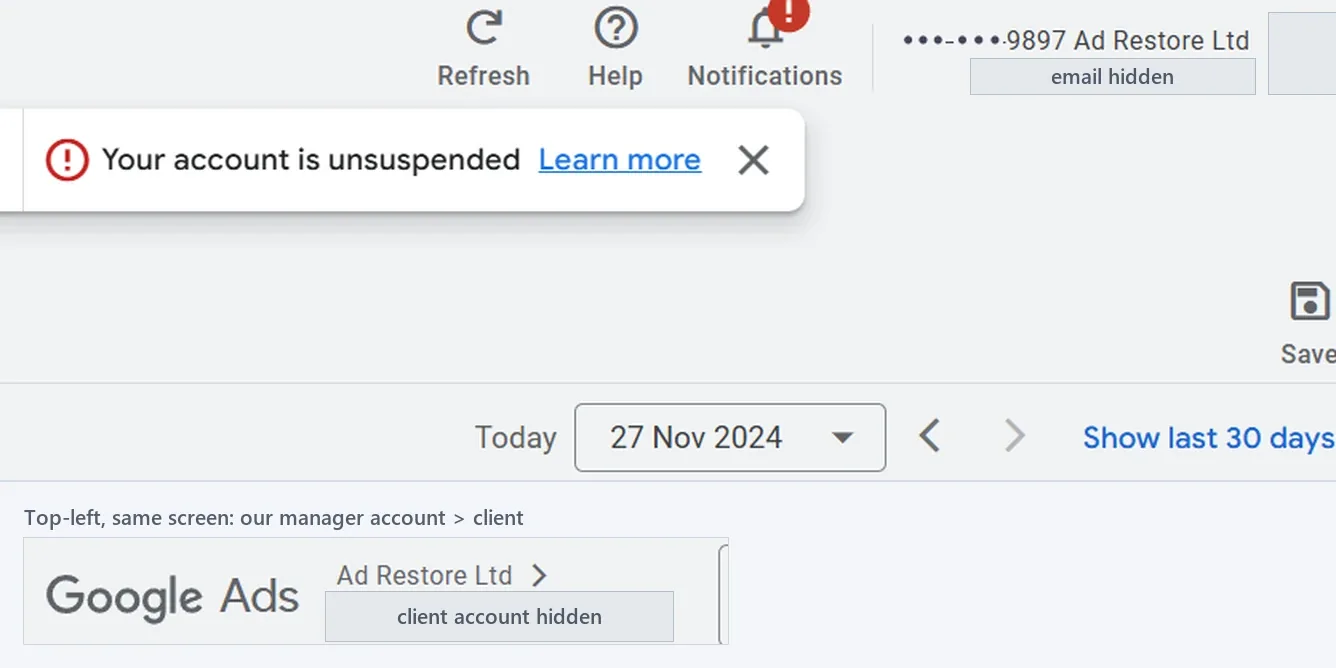
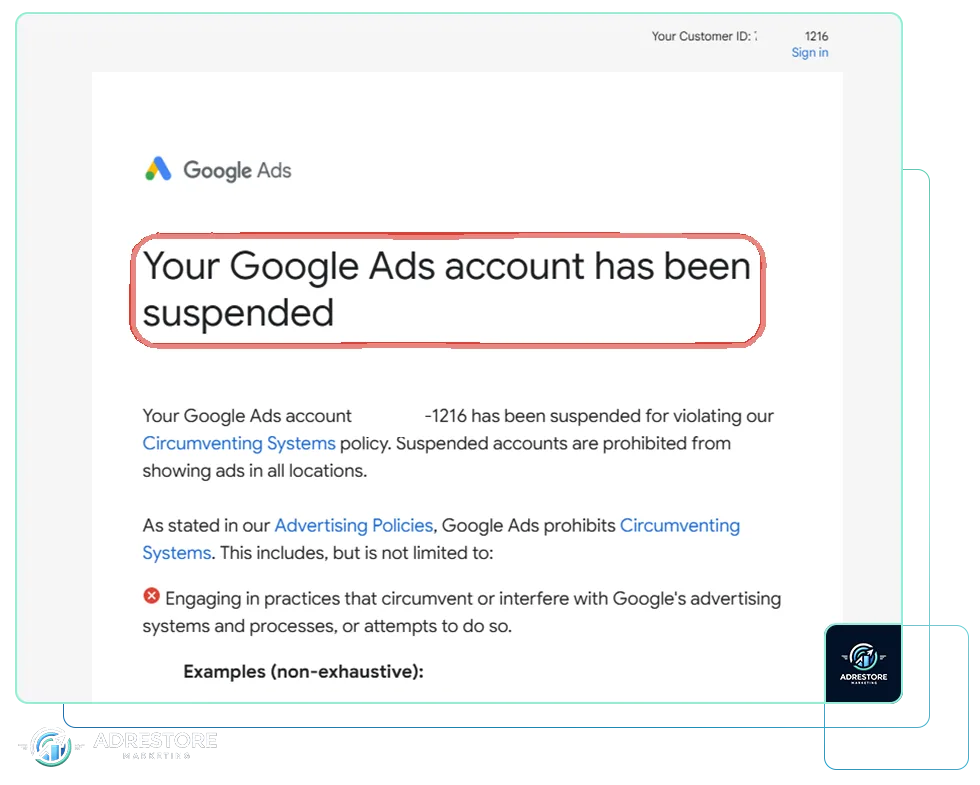
Account suspended The account is stopped for a policy violation. For the most serious policies this happens on detection. Nothing serves. Sometimes. Egregious policies carry no prior warning at all. The suspension email, the account banner, and Policy Manager. A formal appeal with evidence that the violation has been resolved.

If you cannot place yourself in one row with confidence, do not act yet. The next sections narrow it down.

Ad-level versus account-level enforcement

A disapproval is a judgement about one piece of creative and its destination. A suspension is a judgement about the advertiser. That is why they behave so differently: you can have hundreds of disapprovals and a healthy account, and you can have a clean creative library and a suspended account.

Ad-level appeals run under their own rules. Google states that each ad is limited to three appeals, and that after three unsuccessful appeals you cannot file again for that ad without contacting support. Google also asks you to wait at least 24 hours between appeals so they are not treated as duplicates.

When you appeal, you choose one of two reasons, and the choice matters:

  • Dispute decision — you believe the ad already complies and the decision was applied in error. Use this only when you can point to the specific policy text and show the ad meets it.
  • Made changes to comply with policy — you have edited the ad, the assets or the landing page. Use this when something has genuinely changed, and make the change before you file, not after.

In the appeals I have worked on, repeatedly disputing a decision without having changed anything is a common way a fixable ad problem gets worse rather than resolved. Each unsuccessful dispute consumes one of the three, and the ad still does not comply.

Which policies suspend without warning

Google draws a line between ordinary violations and what it calls egregious ones. Its definition is worth reading exactly as written: “An egregious violation of the Google Ads policies is a violation so serious that it is unlawful or poses significant harm to our users or our digital advertising ecosystem.” For those, Google states that the account is suspended immediately without prior warning.

Google publishes the list of policies it treats as egregious:

  • Circumventing systems
  • Coordinated deceptive practices
  • Counterfeit
  • Malicious software
  • Prescription opioid painkillers
  • Promotion of unauthorized pharmacies
  • Unacceptable business practices
  • Trade sanctions violation
  • Sexually explicit content
  • Child sexual abuse and exploitation

If your notification names one of these, there was no warning email, and its absence is not evidence that the suspension is a mistake. The actionable point is different: because no warning was issued, there is no remedial checklist to work from, so an appeal has to establish what was reviewed and show that it now complies. Google states that advertisers have at least 6 months from the date of account suspension to submit an appeal, so an accurate submission matters more than a fast one.

Which policies carry a warning before suspension

Two policies state explicitly that they do not suspend on detection. Google’s Compromised sites policy covers destinations whose code has been manipulated by a third party without the owner’s knowledge, and it states that a warning will be issued at least seven days before any suspension of the account.

If that is your label, the notice period is for the remediation itself. Keep the evidence as you go: scan output, the date the malicious code was removed, the plugin or credential that was the entry point, and confirmation from your host. If a suspension does follow, that evidence is your appeal, already written.

The Evasive ad content policy also warns before it suspends, but it is a completely different finding and it should not be read alongside the one above. It is a prohibition. Google’s wording for what it bans is “Manipulation of text, image, videos, domain, or subdomains used in your ads to attempt to bypass detection and enforcement action.” That is conduct no advertiser should ever attempt, and where an account has been labelled under it the only legitimate route is to remove the offending content and bring the ads into compliance with the policy. Google states that a warning here is likewise issued at least seven days before any suspension. That notice exists so the violation can be corrected before enforcement lands. It is not a period during which the conduct is tolerated, and it is not time an advertiser is entitled to spend.

Paused is not suspended

An account can stop serving without any finding against you. Google’s account pausing documentation is clear that paused accounts cannot run ads, but you keep access to the account and its reports. Two routes account for most pauses:

Advertiser verification not completed in time

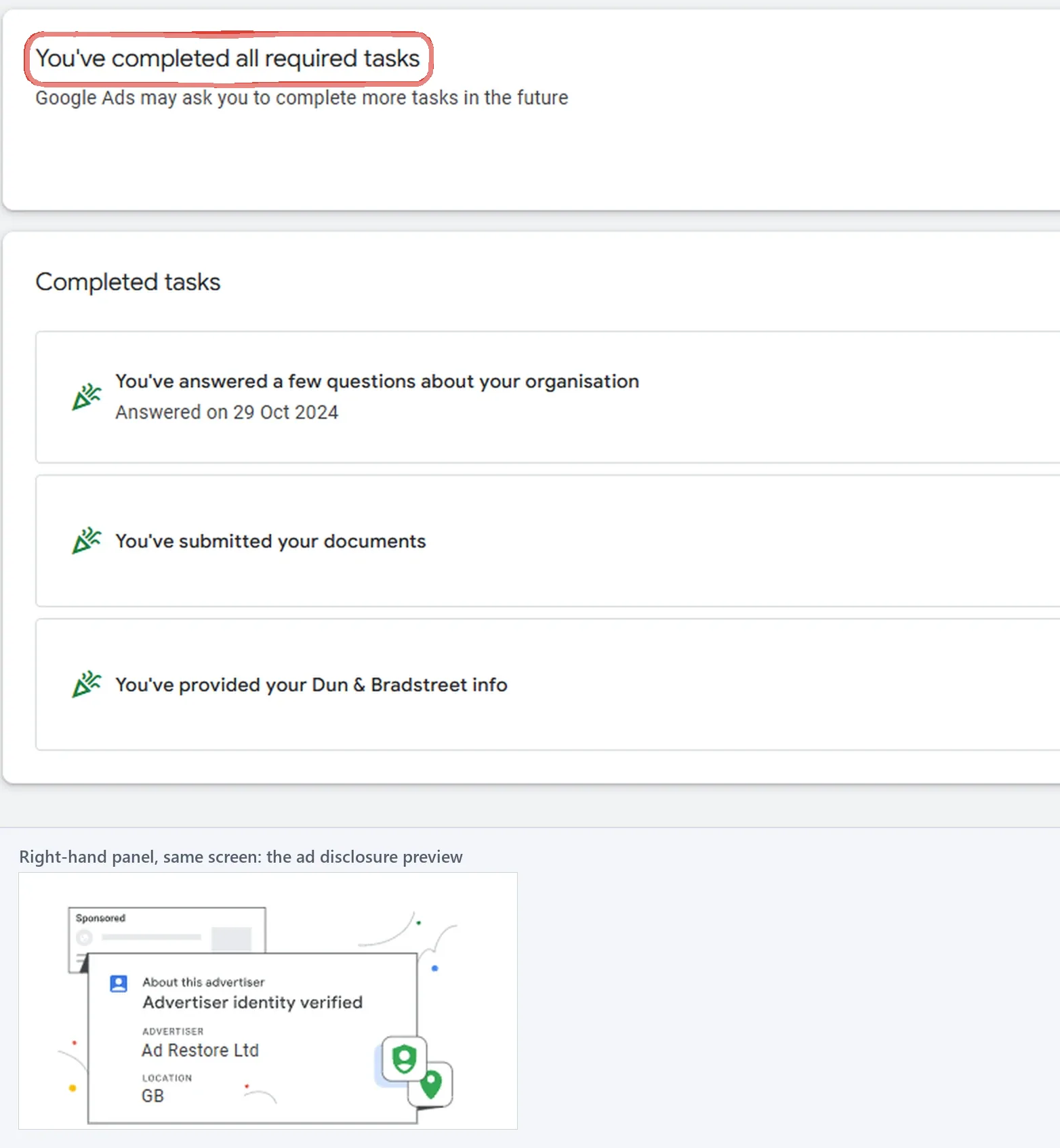
When Google asks a business to complete advertiser verification, it notifies the advertiser by in-account notification or email and tells them what the deadline is. The account pausing page sets out what happens next: there is a 30-day notice period, and if the documentation is not submitted or verification is not completed within that window, the account is paused. Google states that the account will be unpaused after it completes the review of your application and successfully verifies the account. Common reasons an attempt fails include missing licences, an incorrect business type, or an undisclosed relationship between the advertiser and the promoted business — that is what turns an administrative delay into a real problem.

Suspicious payment activity

Where Google detects unusual payment behaviour, it can pause ads pending a payment review. You answer a short set of questions about your payment history from the in-account notification, and may be asked to confirm the payment method. Google publishes timings for this route: if you are asked to confirm a card, the email arrives within ten minutes; if you are not, you get a different email with a decision about the pause within five business days; and after you submit a confirmation code, a decision follows within two business days.

The critical distinction is that in both cases the fix is in-product, not an appeal. Writing an appeal essay when Google has asked for a utility bill or a card confirmation only delays you. That said, “Suspicious payment activity” is also the name of a genuine account suspension, and if your notice says suspended rather than paused you are looking at a billing-integrity case that needs a documented account of who owns the payment instrument and who authorised the spend.

How to confirm which one you actually have

Read three sources, in this order, and do not skip to the third:

  1. The notification itself. The email or in-account notice contains the exact policy name and the exact action taken. Copy that wording out verbatim into a document. Paraphrasing it is where most misdiagnosis begins.
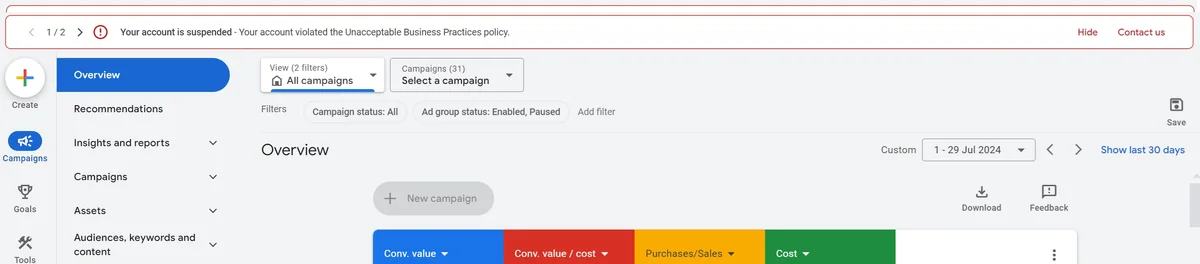
  2. The account banner. The banner across the top of the account tells you whether the account is serving, paused, or suspended. If ads are still delivering, you are not suspended.
  3. Policy Manager. Under Tools, then Troubleshooting, then Policy Manager, you get the ad-level picture: which ads are disapproved, which are limited, which policy each one hit, and the appeal controls. It is also where you see whether a single landing page is behind dozens of disapprovals.

If the banner says suspended but Policy Manager shows nothing unusual at ad level, that is a strong signal the finding is about the business or the destination rather than the creative, and your evidence needs to be about the business.

Reading a compound policy label

Suspension labels usually come in two halves, and the second half is the one that tells you what was actually reviewed. In the notifications I see, the headline policy is followed by the specific violation — cloaking, or multiple account abuse — and those two sit under the same headline policy while pointing at completely different evidence.

Cloaking is about your destination: showing different content to different people, or to Google, so that what is assessed is not what users get. The evidence lives in your site — redirect rules, geo or user-agent logic, plugins, and anything a previous developer or affiliate network installed. Google’s cloaking policy states that it is acceptable to show slightly different content to different people, giving language, regional offers, geography and connection speed as examples, but that the promoted product or service needs to be the same for everyone.

Multiple Account Abuse is about your account estate. The same policy page prohibits creating further Google Ads accounts after a suspension, and running large numbers of accounts for deceptive purposes — its own example is creating dozens of accounts to run a scam. The evidence there is nothing to do with your website at all. It is the list of every account, manager account, login, payment profile and domain associated with your business, and the legitimate operational reason each one exists.

A page of website fixes does not address what a Multiple Account Abuse label is about. Read the second half of the label first.

Where each state leads next

Once you know the state, the route follows from it:

  • Disapproved or limited ads. Fix at ad level in Policy Manager, and check whether one landing page sits behind several disapprovals before you edit any copy — if it does, resubmitting new headlines against an unchanged destination will fail the same way each time.
  • A policy warning. Treat the stated deadline as your working deadline and finish the remediation inside it, rather than replying to the notice and waiting. Our overview of how Google Ads suspension policies work covers what Google expects to see resolved.
  • A paused account. Complete the verification or payment step Google has asked for, in-product, and keep a dated copy of every document and answer you submit — if the first attempt is rejected you will need to show what changed on the second.
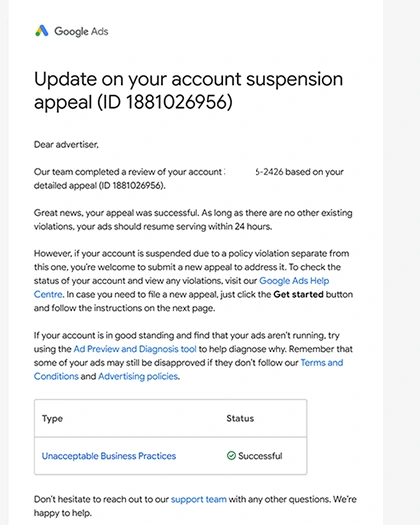
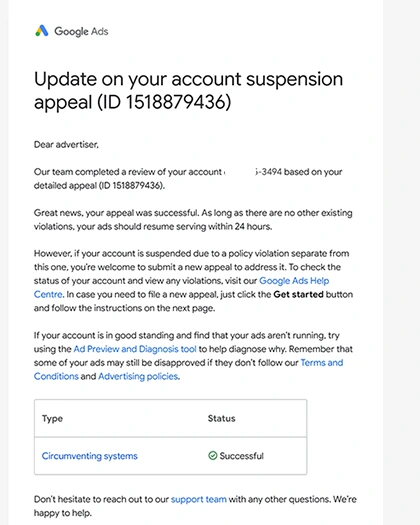
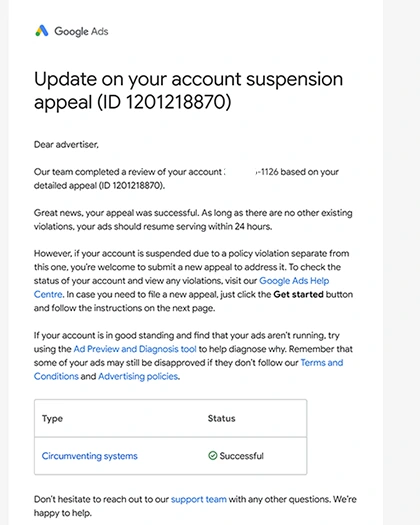
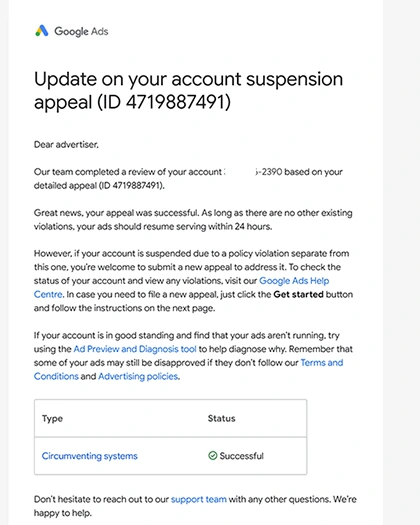
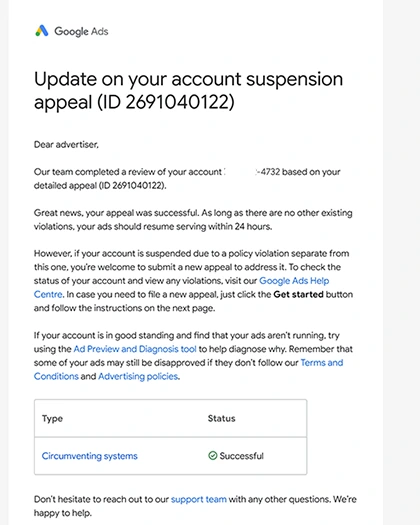
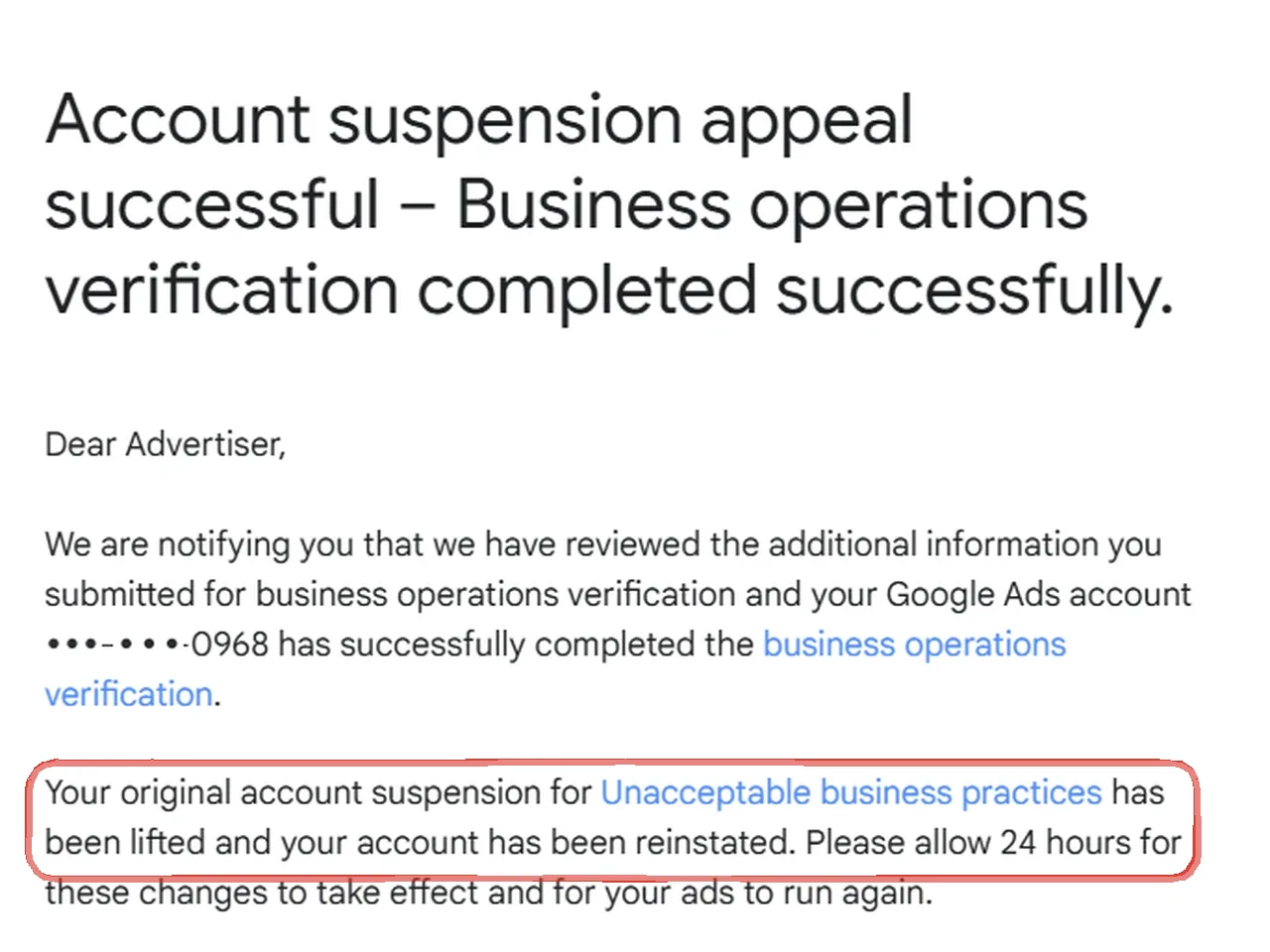
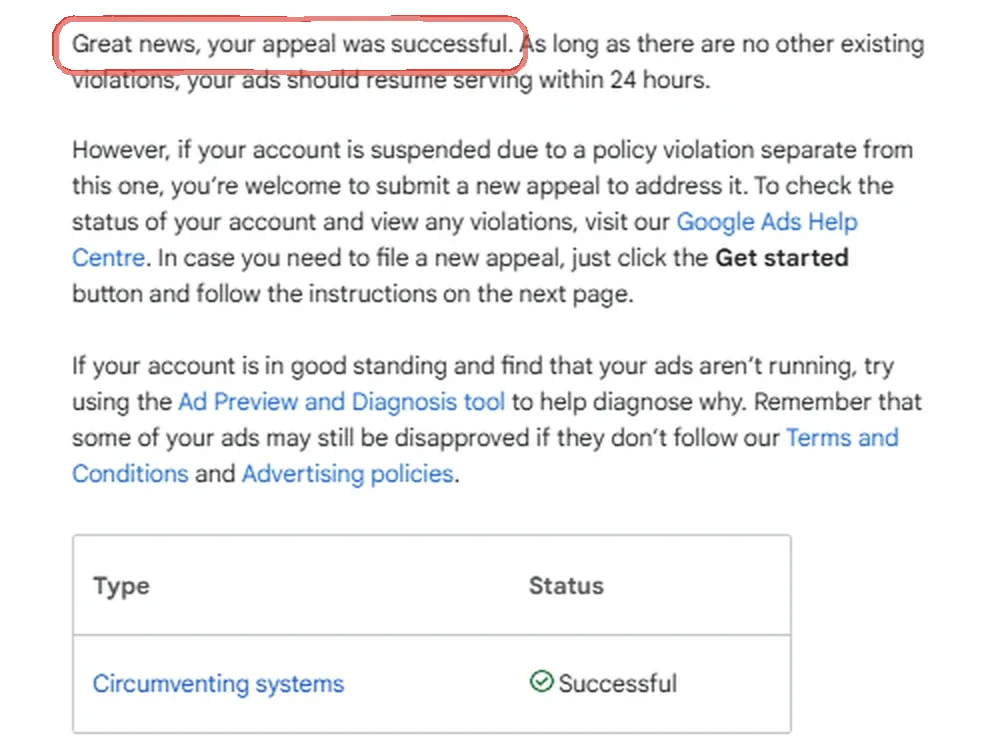
  • A suspended account. Work to the named policy, and build the evidence the second half of the label points at rather than a general tidy-up of the account. We handle appeals under three of the policy labels advertisers commonly arrive with: Circumventing Systems Policy, Suspicious Payment Activity and Unacceptable Business Practices. Our appeal best practices covers how to structure the submission itself, and the wider range of services covers the account and compliance work that follows reinstatement.

If you are still not sure which one you have

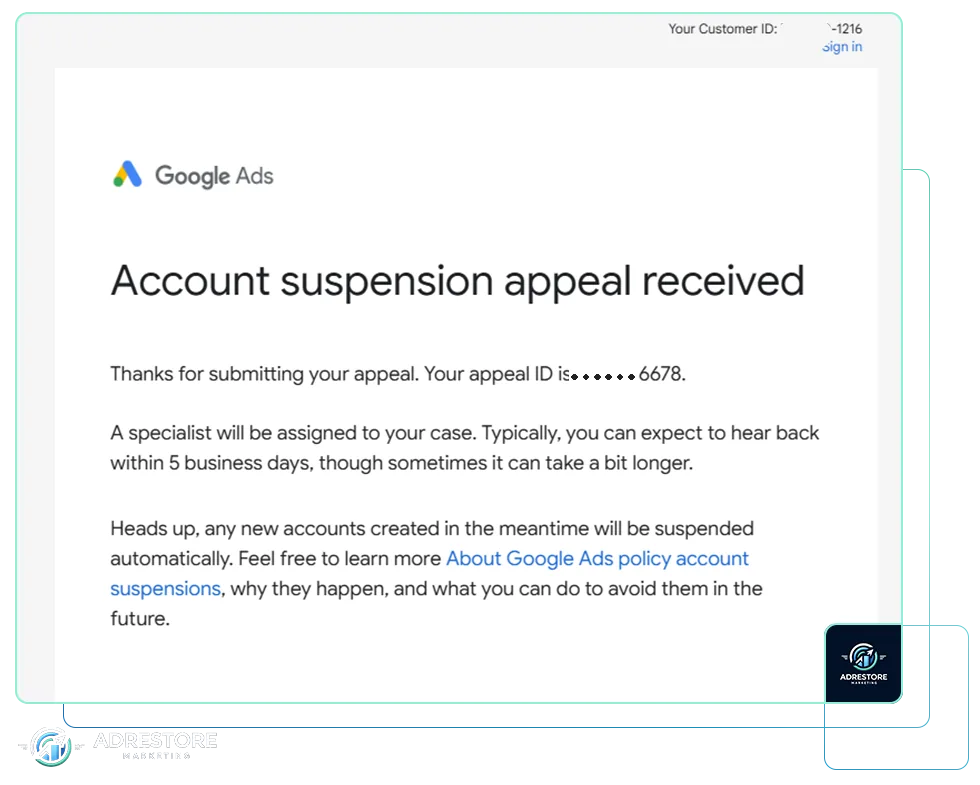
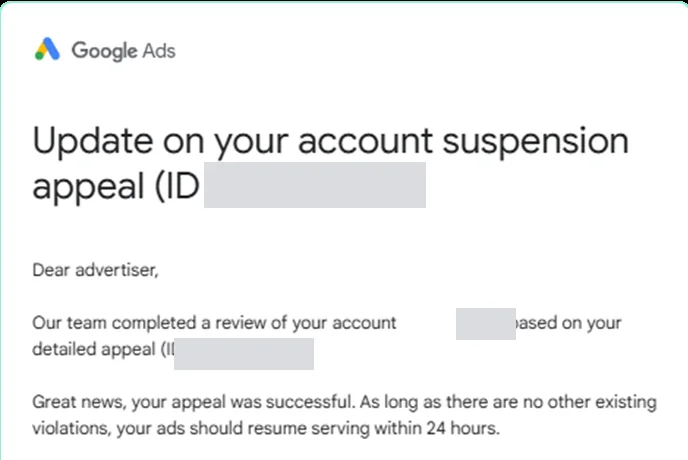
Misdiagnosis is expensive because neither appeal route is unlimited. At ad level the cap is explicit: three unsuccessful ad appeals close that route without contacting support. At account level Google publishes no cap, but it does state that if you file too many appeals for the same account suspension, “we may not process them”, and that where it has indications the appeals function is being misused it will suspend processing of certain appeals for seven days. An account appeal built on the wrong evidence does not address the finding, and it spends a submission in a process that throttles repetition.

If you have the notification in front of you and cannot place it in one of the five rows above, bring it to a free consultation call. Send the exact wording, the account ID and what Policy Manager shows, and we will tell you which state you are in and what the realistic route back looks like — including when the honest answer is that you can resolve it yourself in-product without instructing a firm.

Written by Gianluca Catinella, Director of Ad Restore Ltd. Policy details in this article are drawn from Google’s own published Advertising Policies documentation, linked throughout; Google updates these policies regularly, so check the linked pages for the current wording before you act.

Picture of Gianluca Catinella

Gianluca Catinella

Gianluca Catinella is the Director of Ad Restore Ltd. He has worked with businesses across a wide range of industries, managing high-spend Google Ads accounts and handling complex account suspensions — including some of the most challenging policy and reinstatement cases. His work covers Circumventing Systems Policy, Suspicious Payment Activity and Unacceptable Business Practices, along with advertiser verification, Merchant Center and Google Business Profile suspensions. He came to this work from the receiving end. Running Google Ads for his own first business, he had an account suspended and found almost no support available to explain what had actually been flagged or how to put it right. He spent the months that followed reading the policies properly — every suspension type, what reviewers look for, and what a successful appeal has to contain — and he now tracks Google’s policy changes as they ship. Automated enforcement has to cast a wide net to keep scammers and bad actors out, and legitimate businesses get caught in it. Gianluca’s job is the bridge from confusion to clarity: working out exactly which policy was triggered, fixing the underlying issue, and putting a clear, evidenced appeal in front of Google so the business can get back to trading.
Share this post

More from the blog

Leave a Review

Schedule a Consultation

Preferred contact method