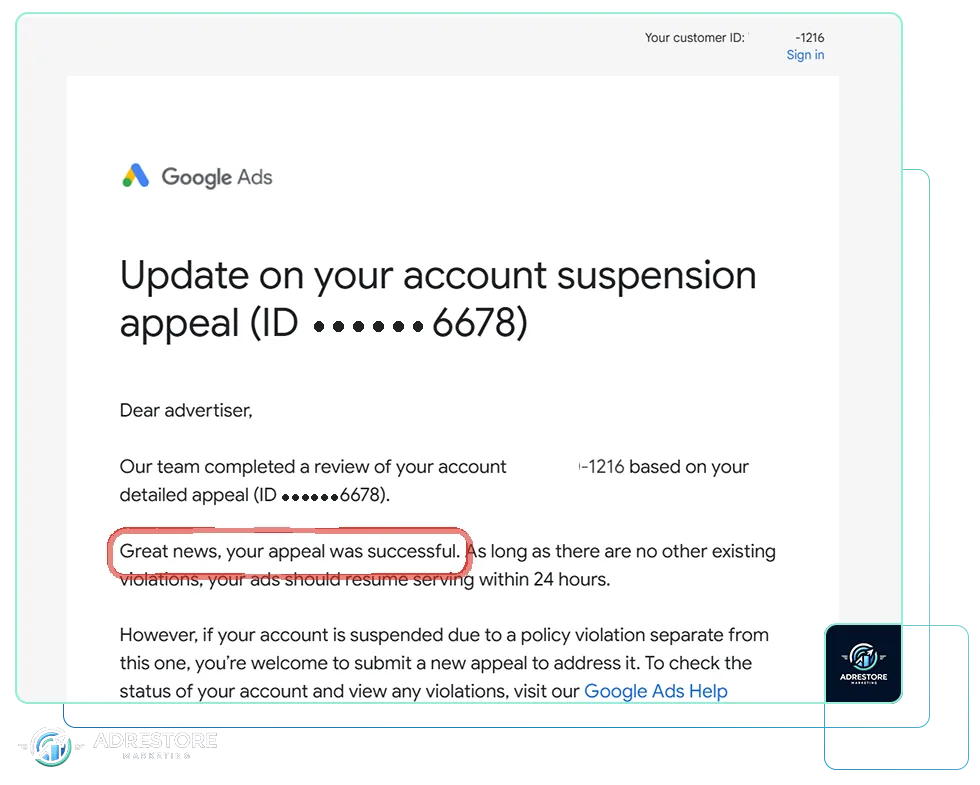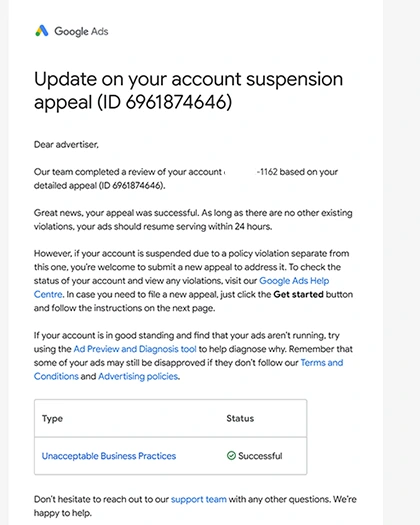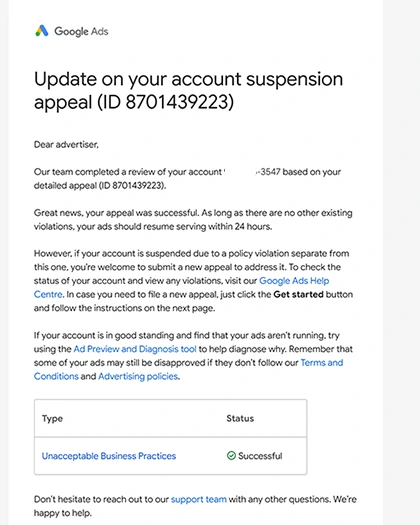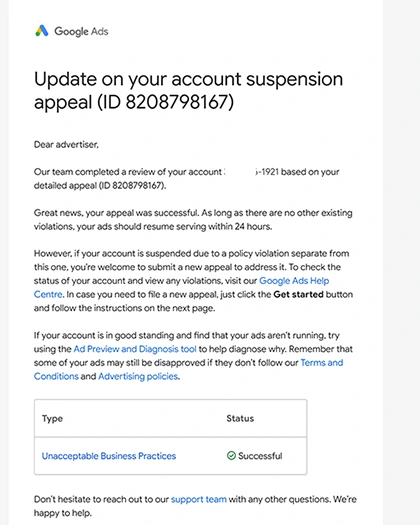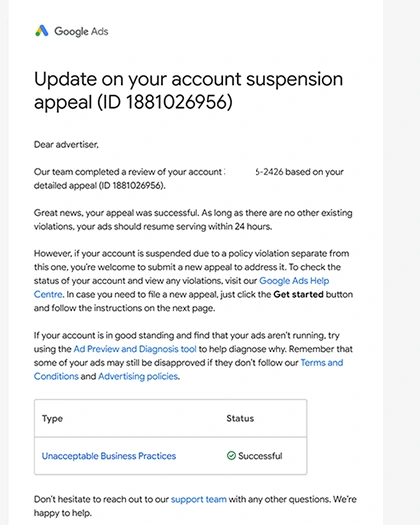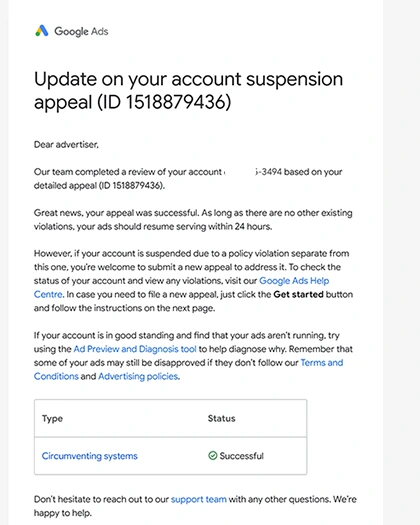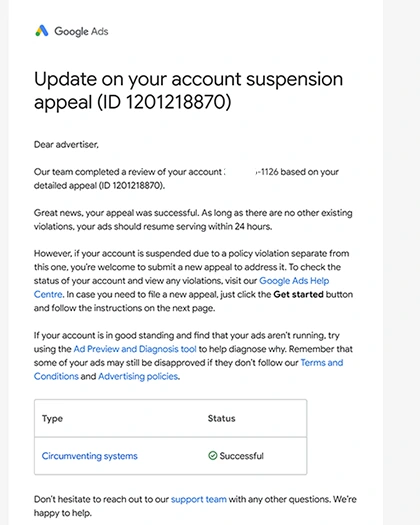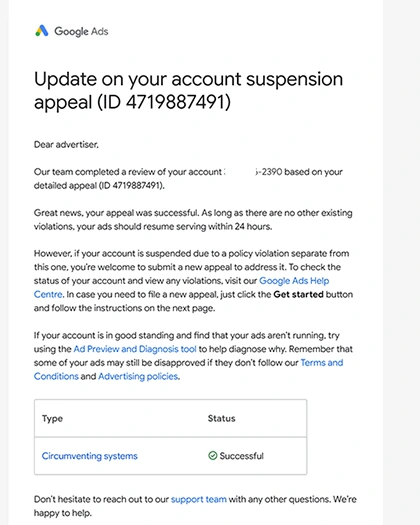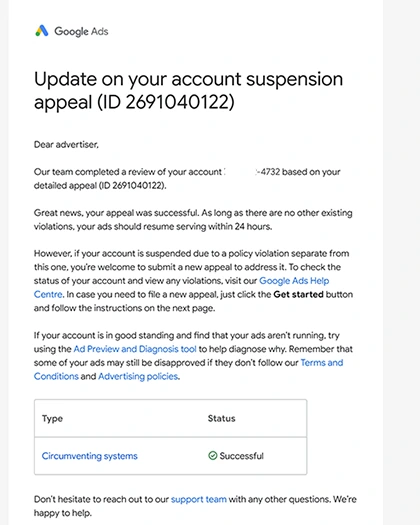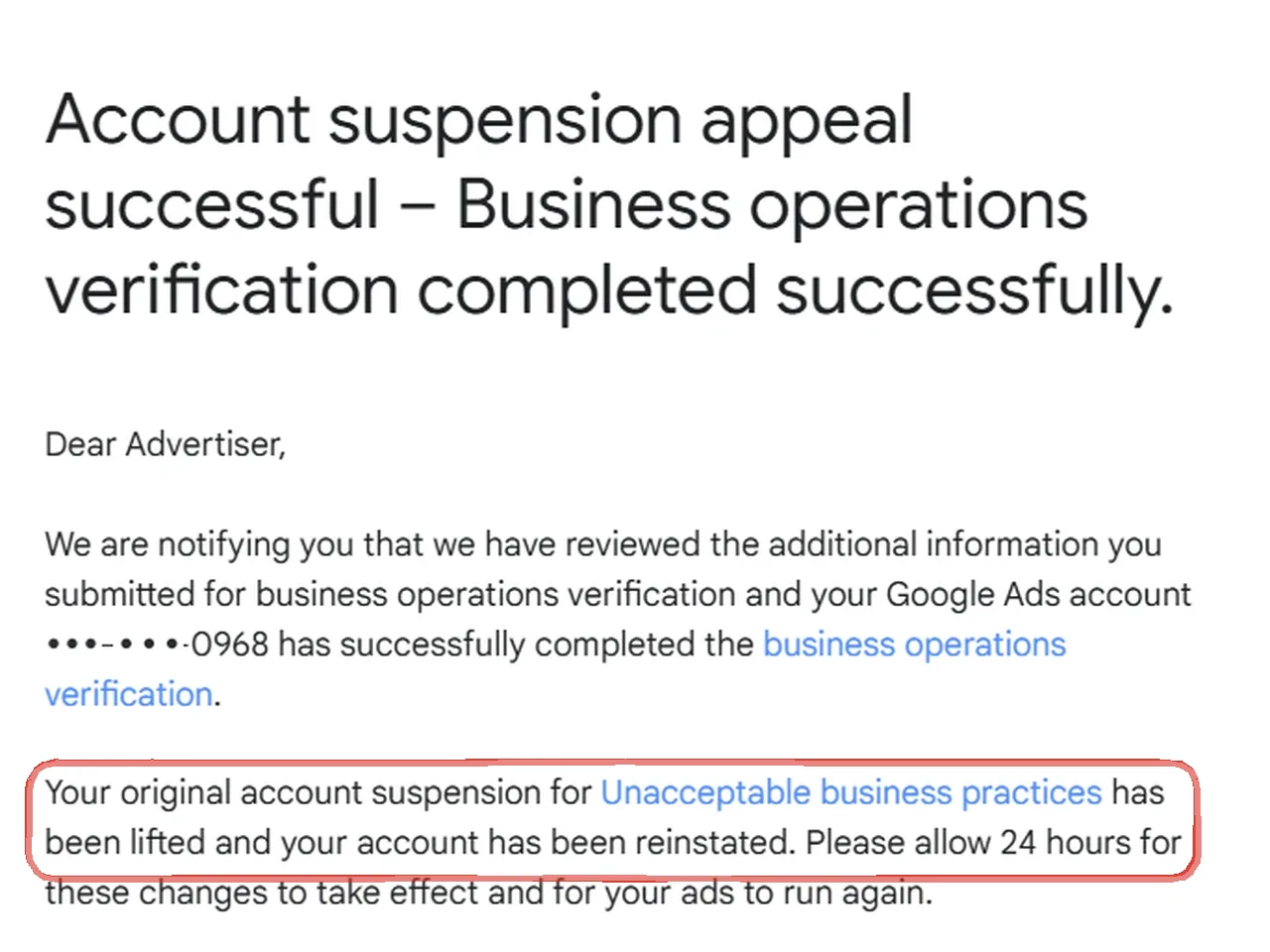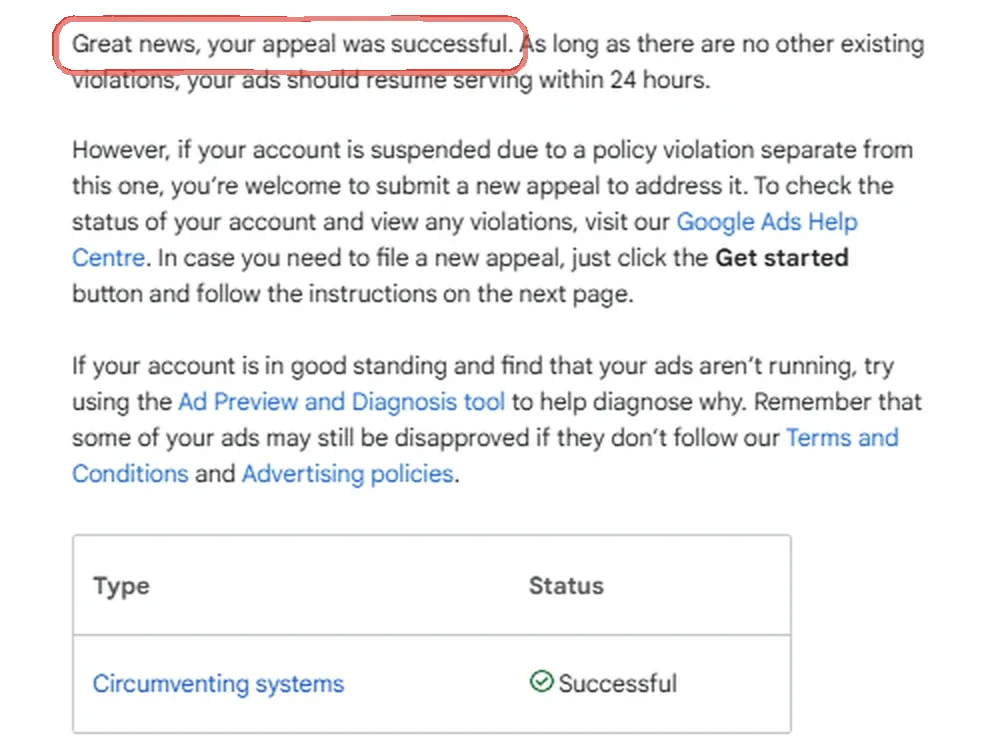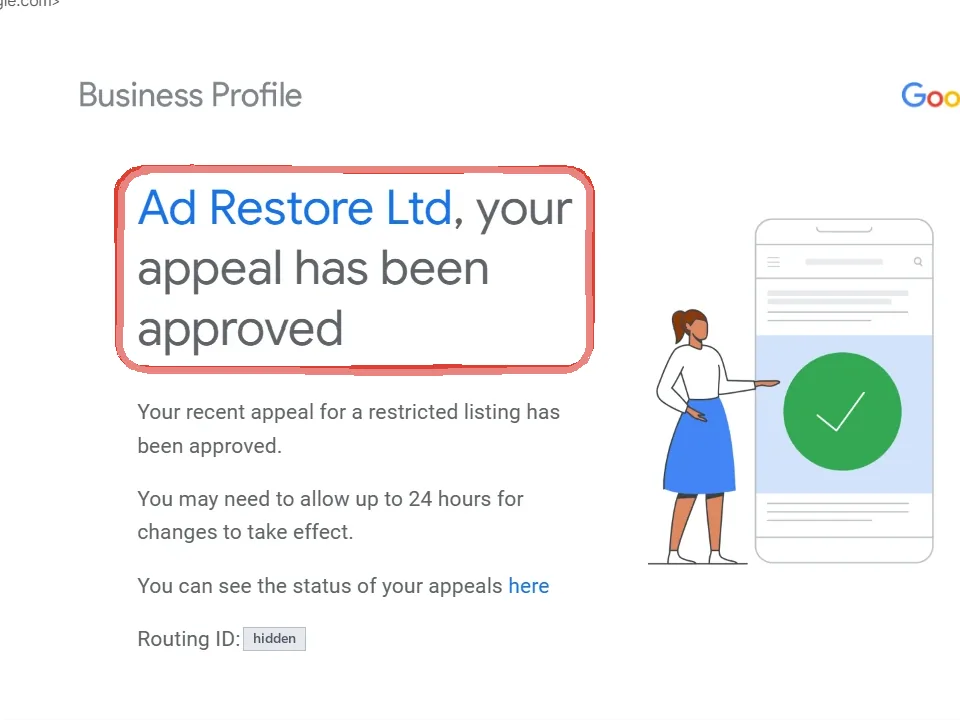
Ad Restore Ltd is a UK Google Ads suspension recovery service registered in Scotland, with its registered office in Dumfries. Realistically, a reinstatement takes anywhere from under a week to just under three weeks. The fastest we have had was inside twenty-four hours. The reason for the spread is that the timeline is not one wait but several: Google takes one to five business days to confirm the account link before work can properly begin, then one to five days to answer each appeal — and a single appeal winning outright is uncommon. Two is normal.
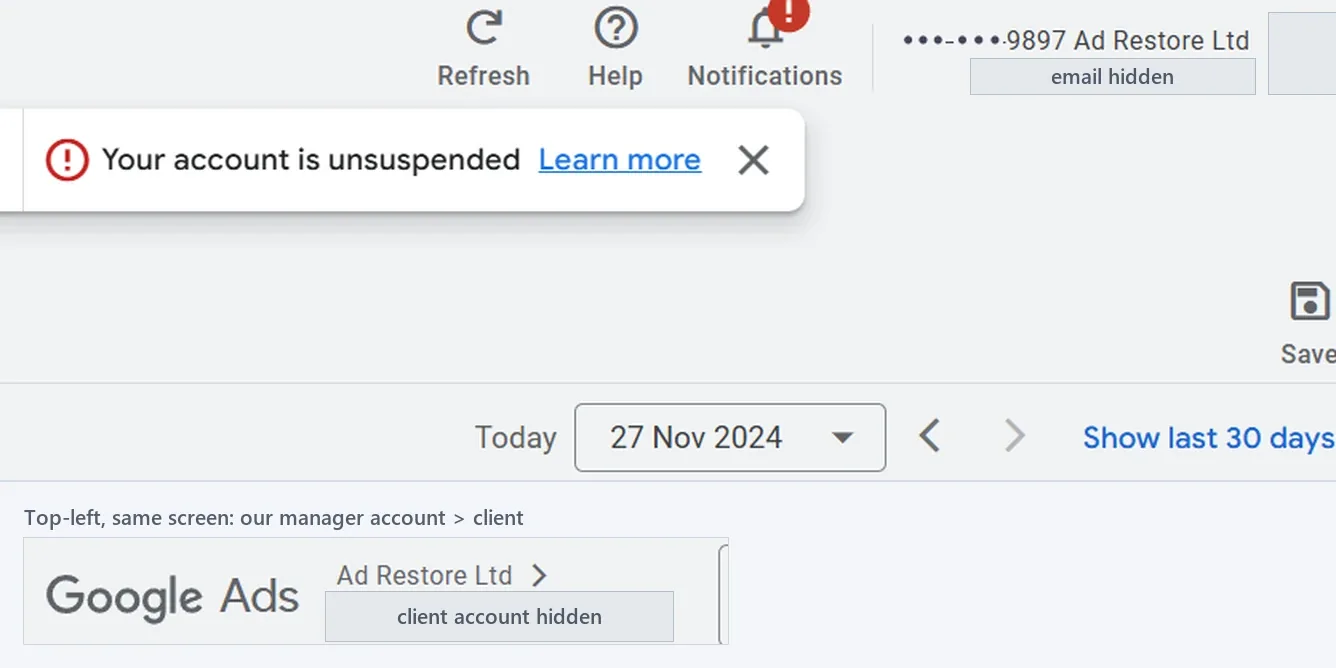
Definition: the clock that matters to you starts when your account is linked to our manager account, because that is the first point at which the account can be reviewed properly. Everything before it is a conversation; everything after it is work Google can see.
The honest version of the timeline
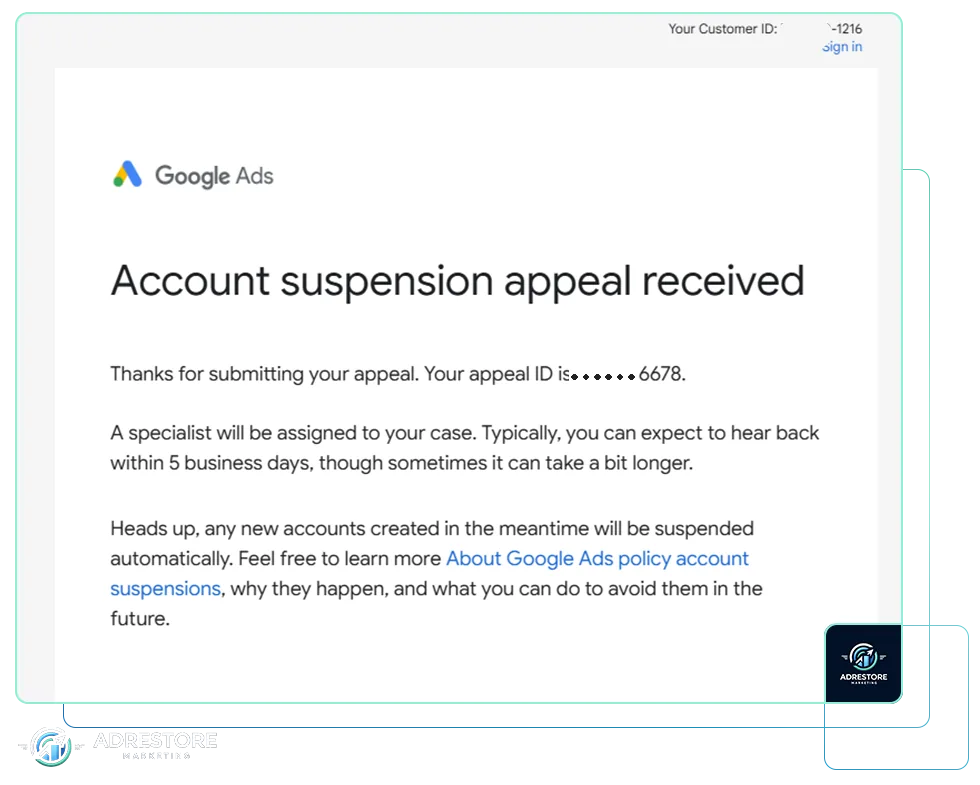
Most published timelines, including one that sat in our own FAQ, quote a figure like “three to five business days” as though it describes the whole process. It does not. That kind of figure describes Google’s response time to one appeal. If the first appeal wins, the whole thing really can be over inside a week. If it does not, you add the time to work out what else needs to change, plus another one to five days for the next decision.
So the arithmetic looks like this:
- One to five business days for Google to confirm the manager account link, from the request being sent.
- Then the audit and preparation, which depends far more on how quickly documentation and site changes come back from you than on us.
- One to five days for Google to decide the first appeal.
- If refused, one to five days more to rework and file again, then another one to five days for that decision.
Add those up and the range falls out on its own: a straightforward case answered first time lands inside a week; a case needing a second and third submission runs to just under three weeks.
How many appeals it actually takes
This is the part most people are not told. In our experience:
- One appeal winning outright is uncommon.
- Two is normal.
- Three is rare.
Past three, a case may genuinely be unsolvable, though we will keep going at your discretion and request. We work to a maximum of five submissions. The fee does not change with the number of submissions.
If you have filed appeals yourself already, that history matters, and it usually makes things slower rather than faster. Repeated submissions with nothing changed between them risk automated rejection, and for a disapproved ad Google limits each ad to three appeals. There is more on that on our page about why Google Ads appeals get rejected.
Does the policy type change how long it takes?
Yes, and in our experience it changes it substantially:
- Suspicious Payment Activity is the quickest. These can come back in a single day, because what is being checked is largely documentary.
- Malicious software findings typically resolve within about a week.
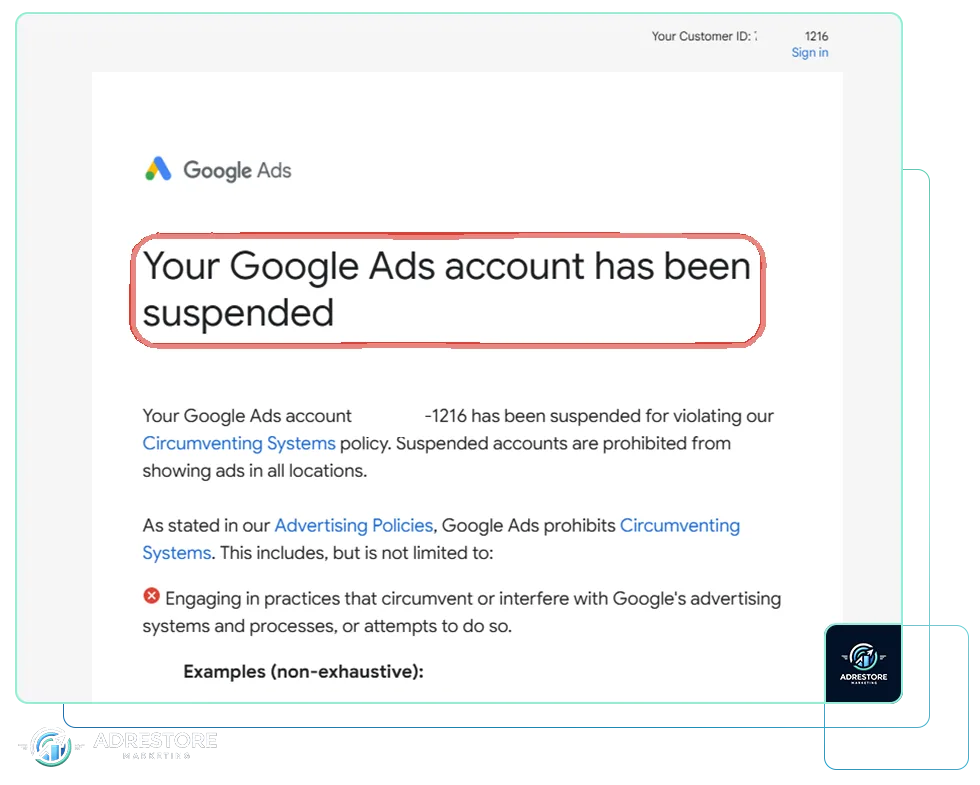
- Circumventing Systems Policy can run long.
- Unacceptable Business Practices can run long too, and is the most variable of the set, because the notice frequently does not make the actual cause obvious. Working out what Google is objecting to is itself part of the job.
Why the fastest case was so fast
Our quickest reinstatement came back inside twenty-four hours. That happens when the appeal is assessed by Google’s automated review rather than routed to a person, and it is far likelier when the submission is written in precise, checkable language against the specific policy cited, with documentation attached that resolves cleanly. A vague appeal gives an automated reviewer nothing to verify, and a human reviewer nothing to act on. This is one of the few parts of the timeline anyone can actually influence.
What makes a case slow
Almost always the same two things, and neither of them is Google:
- Collecting the documentation. Government-issued photo ID for an authorised representative, business registration records, evidence tying the company to its trading address, domain ownership. See what documents Google wants for a suspension appeal.
- Making the landing page changes. We specify precisely what has to change and why. Making the change is yours to do, and this is the single most common delay we see.
A client who returns documentation the same week and makes the site changes promptly is usually at the fast end of the range. A client who takes three weeks to send an ID document has added three weeks to their own timeline, and there is nothing we can do about it from our side.
What is on you, and what is on us
Ours: the audit, the diagnosis, the documentation pack, writing and filing every appeal, and dealing with Google directly. We never need your password — only your Google Ads customer ID, as set out on our page about appealing without handing over account access.
Yours: accepting the account link when Google contacts you, supplying the documentation, and making the changes to your own website. We do not edit your site, and we do not edit your ads, keywords or campaigns.
Google’s: the decision, and how long it takes to reach it. Nobody controls that, and anyone who tells you otherwise is selling you something.
The sequence, start to finish
- Free consultation. We go through the business, the suspension, and the account. You get a proposal on the call.
- Proposal signed. Nothing begins until it is.
- Onboarding. We request the manager account link using your customer ID. Google contacts you directly to confirm, typically within one to five business days, and the link exists only once you accept.
- Full audit. Settings, payment profile, documentation, keywords, ads and landing pages.
- Your actions. We send a written document of required site changes and the documentation list.
- First appeal drafted and filed.
- Google’s decision, one to five days. If refused, we rework and file again.
- Reinstatement, then the invoice — in that order, never before.
- Fourteen days of post-reinstatement support, with the account still linked to us so Google’s notices come to us. On day fifteen the account is unlinked unless you extend.
When we tell you it is not going to happen
Typically by around the fifth submission. If Google has pushed back completely, and we have assessed everything, and the documentation is accurate and the changes have all been made, then continuing to file is not a strategy. At that point the conversation turns to alternative routes to advertising on Google, which is a separate consultation.
Some cases we identify as unwinnable before any of this, at the free consultation, and we say so then rather than bill you to find out. Those are set out on our page about when a Google Ads suspension cannot be fixed.
If you want an estimate for your own case rather than a range, book a free consultation. We will tell you on the call what we think it will take, and whether it is winnable at all.